The Challenge
Odoo gives you powerful operational tools and stores an enormous amount of data about your business. But knowing that the data is there is not the same as being able to use it. Standard reports answer the questions you thought to ask — not the ones that matter most right now.
Building a custom report requires technical knowledge most business owners don't have. And by the time a report is ready, the situation it describes has already changed.
The result is a common paradox: a system full of data, and a management team that still makes decisions based on gut feeling because getting the right numbers takes too long.
The main challenges include:
Standard Odoo reports answer fixed questions — any variation requires technical intervention
No proactive alerts — you only discover a problem when someone notices it, often too late
Data from external sources cannot be combined with Odoo data in a single view
Asking a question about your own business data requires knowing how to write queries or navigate complex filter menus
Management spends time extracting and formatting data instead of reading and acting on it
The Solution
Instead of navigating report menus, you ask questions in plain language and get answers instantly. Instead of waiting for someone to build a dashboard, you describe what you want to see and the system builds it. Instead of discovering problems after the fact, you receive automated alerts on Telegram or email the moment something needs your attention — whether that is a sales target at risk, an overdue invoice, or a stock level below threshold.
And if your business uses other tools alongside Odoo, those data sources can be connected too, giving you a single, complete view of your operations.
1
Ask anything about your data
Type your question in plain language — "Which customers haven't
ordered in the last 60 days?", "What is my gross margin by product
category this quarter?", "Which open invoices are more than 30 days
overdue?" — and get an immediate, accurate answer drawn directly from your
Odoo data and any connected external sources. No filters, no queries, no
technical knowledge required.
2
Build reports and dashboards without technical help
Describe the report or dashboard you need, and the module generates it
automatically. Save it for recurring use, share it with your team, and schedule
it to be delivered by email at the frequency you choose — daily, weekly,
monthly. Your reporting setup evolves with your business, without waiting for a
developer every time your needs change.
3
Receive alerts before problems become crises
Define the conditions that matter to your business — a customer whose
credit limit is exceeded, a product that has not moved in 30 days, a project
running over budget — and receive an automatic notification on Telegram or
email the moment that condition is met. You stay informed without having to
check dashboards manually. The system watches the numbers so you don't have to.
4
Connect all your data sources in one place
Your business data does not live only in Odoo. Connect external sources
and analyse everything together in a single interface. Ask questions that cross
systems, build reports that combine operational and external data, and finally
get a complete picture of your business without switching between tools.
Technology Stack

Odoo ERP
The module is installed directly inside your Odoo instance — no external applications, no separate login, no data leaving your system. It works with your existing Odoo data across all active modules.
Anthropic Claude AI
The natural language understanding and report generation engine is
powered by Claude, Anthropic's AI model. This is what allows the system to
interpret plain language questions accurately, generate correct data queries,
and produce readable, structured answers — without requiring the user to know
anything about how the data is structured underneath.
Telegram & Email
Alerts and scheduled reports are delivered via Telegram or email —
whichever fits your team's workflow. Telegram notifications are instant and
actionable, making them ideal for time-sensitive alerts. Email delivery is
suited for scheduled reports and summaries that need to reach a broader
audience or be archived. Both channels can be configured independently per
alert type and per recipient.Key Benefits

The answers you need, when you need them
The gap between having a question about your business and getting a reliable answer should be seconds, not hours or days.
AI Analytics & Reporting eliminates the dependency on technical staff or manual extraction for every data request — so you and your team spend time acting on information, not waiting for it.
Problems surface before they cost you
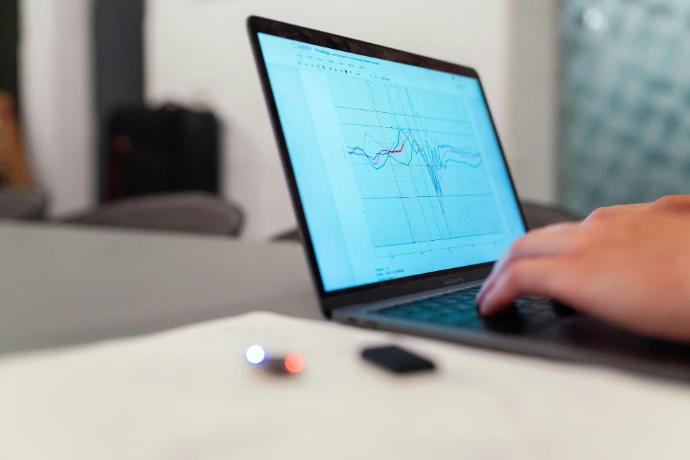
Most operational problems don't appear suddenly — they build gradually, and become visible only when the damage is already done.
Automated alerts mean the system is continuously monitoring the conditions you care about and notifying you the moment something moves in the wrong direction. You intervene early, when it is still easy to fix.
One view of your entire business
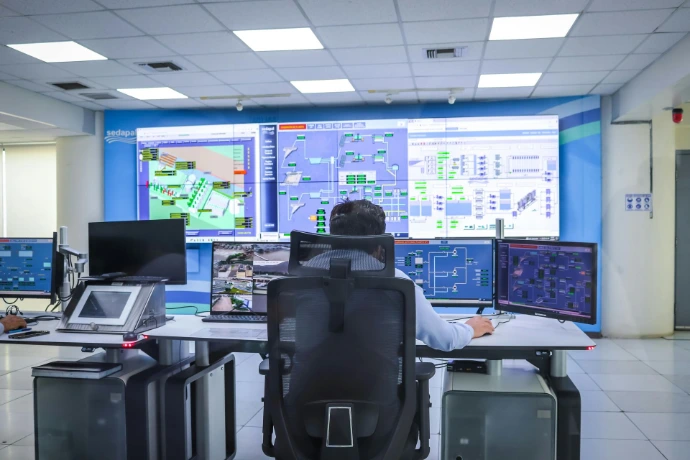
No business runs on a single tool. By connecting external data sources alongside your Odoo data, AI Analytics & Reporting gives you a genuinely complete picture — not just a fragment of it.
Ask questions that span systems, spot correlations that would be invisible if you only looked at one source at a time, and make decisions based on the full picture of your business.